
Styles, Fabrics, and 2026 Trends
What Type of Blinds Look Most Expensive? When you step into a luxury home or a boutique hotel, you might not notice the window blinds immediately—and that’s precisely the point. High-end window treatments don’t scream for attention; they frame a room with quiet confidence, subtle texture, and flawless tailoring.
If you’re looking to elevate your home’s aesthetic without an architect-sized budget, choosing the right window blinds is one of the highest-return design decisions you can make. But what actually makes a blind look expensive? Is it the fabric, the style, the colour, or the technology?
Here is your ultimate guide to high-end window treatments, including premium fabrics, luxurious styles, and the top 2026 design trends from Best Blinds4u.
The Styles That Exude High-End Elegance
Not all blind styles are created equal when it comes to visual weight and elegance. If your goal is an opulent, custom-made aesthetic, these styles top the list:
Roman Blinds
Roman blinds are the undisputed royalty of soft window coverings. Unlike flat roller shades, Roman blinds form soft, cascading fabric folds when raised, creating a tailored, furniture-grade finish.
-
Why they look expensive: They bring the tactile softness of heavy drapes into a sleek, structured window space. Custom waterfall or cascading Roman blinds in heavy linen or velvet automatically elevate any room.
Fine Woven Wood Shades
Woven wood shades—made from natural bamboo, woven grasses, jute, or slender wooden slats—bring an organic, artisanal richness to an interior.
-
Why they look expensive: High-end interiors rely heavily on natural textures. Fine-weave wood shades offer tailored craftsmanship and warm light filtration that synthetic materials simply cannot replicate.
Motorised & Integrated Smart Roller Shades
Minimalism can look cheap if done poorly, but when executed with precision and motorisation, it looks cutting-edge luxury.
-
Why they look expensive: Smooth, whisper-quiet automated movement with no dangling cords or chains creates a clean, architectural finish.
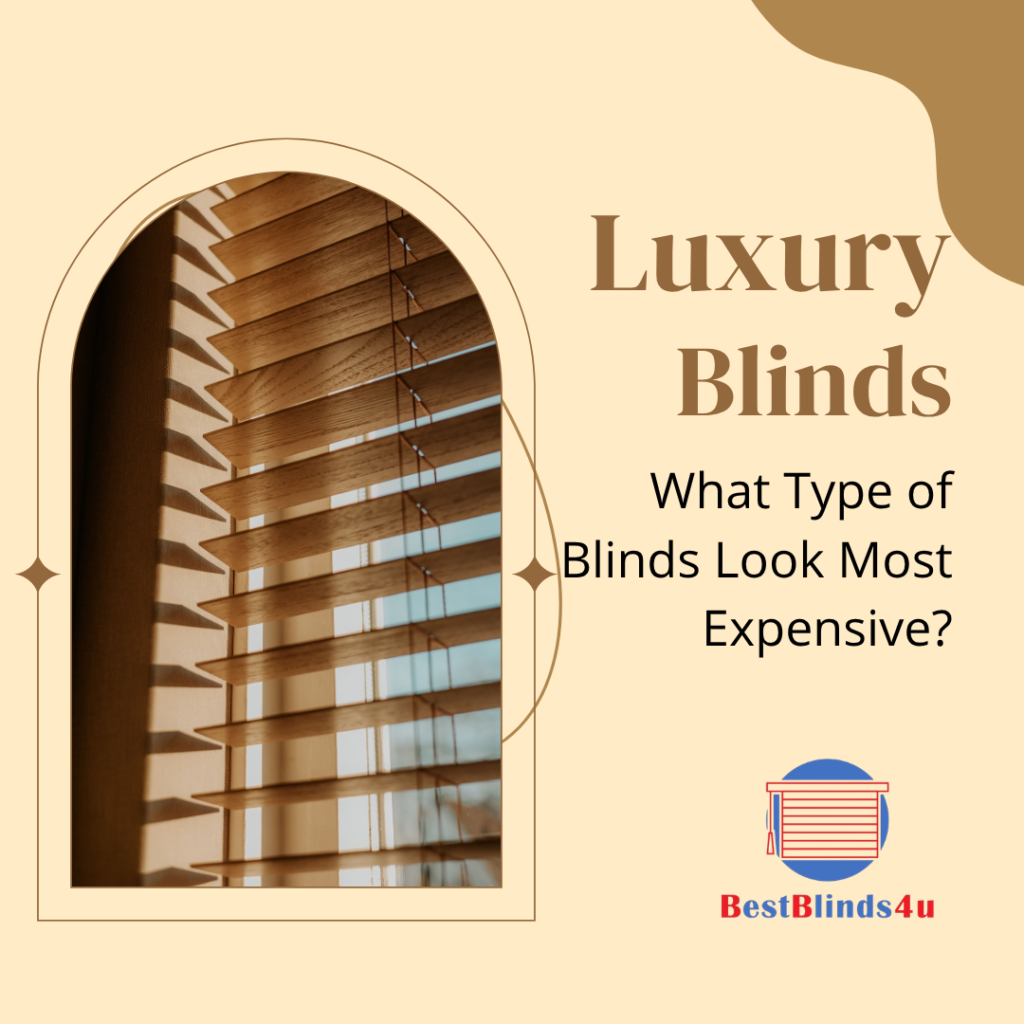
Real Hardwood Venetian Blinds
While faux-wood and PVC blinds serve a practical purpose in high-moisture rooms, nothing replaces the grain, warmth, and depth of real timber. Wide slats (50mm / 2-inch) give a bolder, more custom architectural line than narrow slats.
Fabrics and Materials That Look High-End
The touch and drape of a fabric instantly broadcast its quality. If you want a blind to look bespoke, prioritise these materials:
-
Linen and Linen Blends: Linen is the defining fabric of “quiet luxury”. Its slubbed texture catches light beautifully, offering an effortlessly elegant, relaxed yet tailored look.
-
Velvet: For formal dining rooms, bedrooms, or dramatic lounge spaces, rich velvet Roman blinds absorb light and add deep, tactile luxury.
-
Textured Jacquards and Wovens: Plain flat polyester often looks mass-produced. Choosing jacquards, subtle slub weaves, or tonal geometric patterns adds depth and visual interest.
-
Lined Fabrics: A key secret to high-end blinds is what’s on the back. Premium blinds always feature light-filtering or blackout linings that add weight, structure, and protection against sun fading.
Key 2026 Window Covering Trends
Design trends in 2026 focus on comfort, warm tactile elements, and subtle technology. Here is how to keep your windows ahead of the curve:
Layered Treatments (Blinds + Sheers)
In 2026, single window treatments are giving way to layered combinations. Pairing a textured blackout Roman shade or motorised roller blind with flowing sheer drapes creates depth, flexibility, and architectural scale.
“Quiet Luxury” & Tactile Softness
Sterile minimalism is out; cosy, sensory environments are in. Homeowners are choosing soft-close mechanisms, concealed headrails, and warm, tactile textiles that soften the clean lines of modern homes.
Smart Automation as Standard
Motorisation is no longer just a gimmick—it’s an expected element of luxury homes. Automated shades synchronised with natural daylight schedules bring convenience, energy savings, and modern sophistication.
The Best Colours That Look Expensive
Colour plays a major role in how expensive a blind appears. High-end palettes focus on complex, warm tones rather than harsh, stark shades.
| Colour Family | Top Expensive-Looking Shades | Why It Works |
| Warm Neutrals | Cashmere Cream, Oatmeal, Soft Mushroom, Warm Sandstone | Softens harsh light, feels warm and grounded, and pairs effortlessly with natural wood and stone. |
| Earthy Tones | Terracotta, Muted Sage, Olive Green, Clay | Gives a custom, designer feel that connects interior spaces to nature. |
| Deep Jewels & Darks | Anthracite, Midnight Navy, Deep Emerald, Rich Charcoal | Creates dramatic contrast, framing windows like dark artwork frames. |
Pro Tip from Best Blinds4u: Avoid stark, optic white or flat cool greys if you want a high-end feel. Warm off-whites, alabaster, and soft greiges reflect light far more gently and look custom-dyed.
Ready to Transform Your Windows?
A high-end look doesn’t require an over-the-top budget—it requires smart choices in fabric, fit, and style. At Best Blinds4u, we supply and fit made-to-measure blinds tailored to your exact window dimensions, giving you that designer finish every time.
