
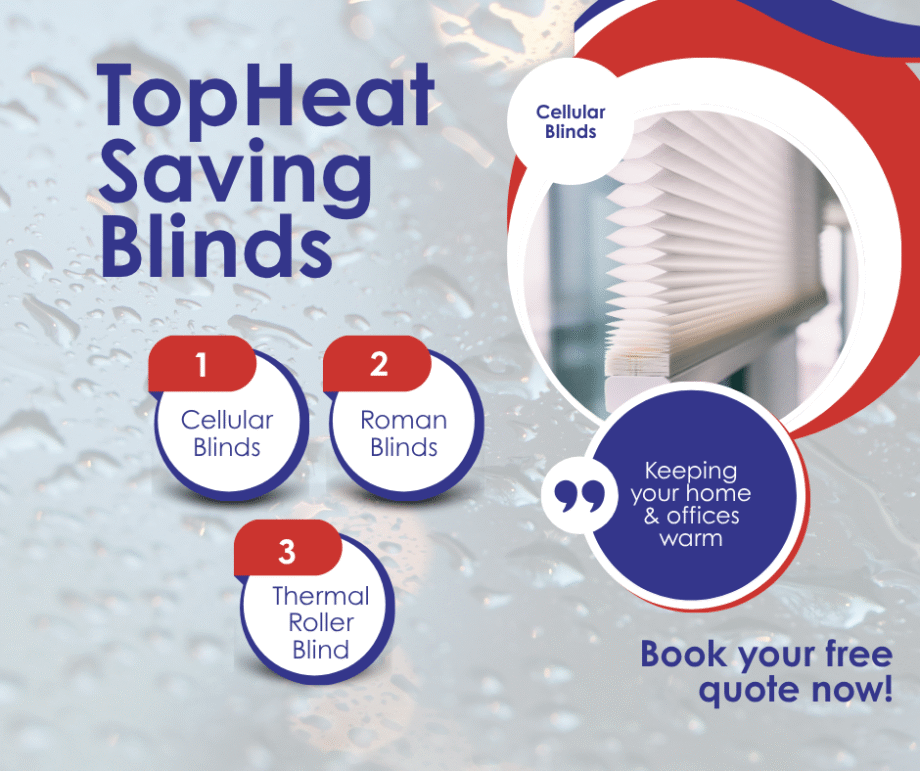
Insulated Cellular Blinds
Top Choice: Insulated Cellular blinds
Cellular blinds are the most insulating type of blind on the market. They’re available in a variety of styles, from traditional honeycomb to cellular blinds that combine the look of a roller blind with a cellular blind.
-
How they work: Their unique honeycomb structure features small pockets of air. This trapped air acts as a powerful insulator, creating a thermal barrier that significantly slows the transfer of heat between your warm room and the cold windowpane.
-
Performance: They can reduce heat loss through windows by up to 40% or more, leading to potential heating energy savings. Double or triple-cell designs offer even better insulation (higher R-value) than single-cell.
-
Bonus: They work in reverse during the summer, helping to keep heat out and your home cooler.
Other Excellent Insulating Options
While cellular blinds are the most effective, several other types of blinds and window coverings offer substantial insulation benefits, especially when made with a thermal lining:
-
Thermal Roman Blinds: These are made from thicker, luxurious fabric and can be customised with a specific thermal or blackout lining. The thick fabric and lining create a dense barrier to reduce heat loss.
-
Shutters (especially Perfect Fit): Shutters, particularly those that fit snugly into the window frame, create an insulating layer of air and offer a solid physical barrier against drafts. Faux wood venitians are also a great, easy-to-clean option.
-
Thermal Roller Blinds: A cost-effective solution, these are typically made from a thicker, insulated material or have a special reflective thermal backing to help reflect heat back into the room.
-
Blackout Blinds: Due to the thick, tightly woven fabric used in blackout material, they naturally offer significant insulation benefits, even if they aren’t specifically labelled “thermal.”
Tips for Maximum Winter Effectiveness
Regardless of the blind you choose, you can maximise its warmth with these simple steps:
-
Close at Dusk: Close your blinds as soon as the sun goes down to trap the heat generated or absorbed during the day.
-
Open on Sunny Days: Open blinds on south- and east-facing windows to allow the sun’s natural warmth (solar heat gain) to heat your room during the day.
-
Ensure a Snug Fit: Blinds that fit tightly within the window recess (or even “Perfect Fit” systems) will minimise gaps for drafts and escaping heat.
-
Layer Up: For maximum performance, layer blinds with heavy, insulated curtains or drapes to create a double barrier.
Cost
Key Factors Affecting the Cost
-
Size of the Window: This is the biggest factor. A large bay window will cost significantly more than a small bathroom window.
-
Ready-Made vs. Made-to-Measure (Custom):
-
Ready-made are cheaper but offer limited sizes, and a perfect fit is rare, which can compromise the thermal performance due to gaps.
-
Made-to-Measure are more expensive but guarantees a snug fit, maximising the insulating benefit and saving more on energy long-term.
-
-
Type of Cell:
-
Single Cell is the most affordable and provides good insulation.
-
Double or Triple Cell is the most thermally efficient (higher R-value) but also the most expensive.
-
-
Special Features:
-
“Top-Down/Bottom-Up” (allowing you to open the blind from the top or the bottom) adds cost.
-
“Perfect Fit” (no-drill system) is typically priced higher.
-
Motorisation (electric or smart blinds) adds the most significant cost to the base price.
-
Because their purpose is to save energy, the extra cost of a good quality cellular blind is often offset by reduced heating bills over time.
Do you have a specific window size or room in mind that you’d like an estimate for to get ahead of winter?
